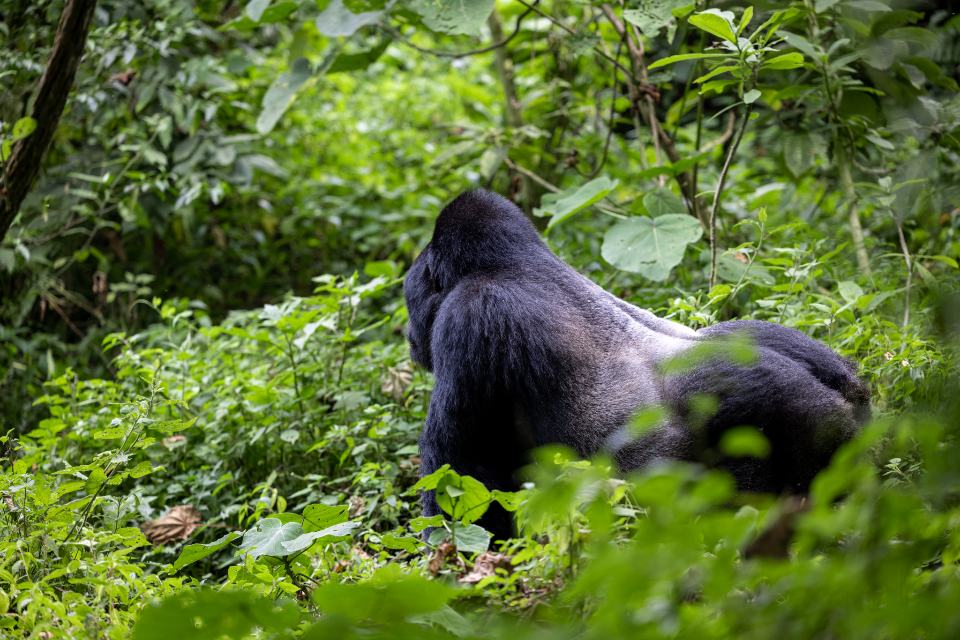
Most people book a gorilla trek knowing only two things: it involves a walk in the forest, and at the end there are gorillas. Here is what the rest of the day usually looks like, so nothing comes as a surprise.
An early start and a briefing
You’ll be up before dawn and at the park office for a briefing at around 7:30 or 8:00. Rangers go through the rules, answer questions and split everyone into small groups, each assigned to one habituated gorilla family. If you’re worried about fitness, say so here. Rangers try to match slower walkers with families that are usually closer to the trailhead, although nobody can promise where the gorillas will be that day.
The walk in
Trackers head out early to find where the family nested the night before, then radio the rangers leading your group. The walk can take anything from half an hour to most of the day. Trails in Bwindi and the Virungas are steep, often muddy and sometimes cut through dense vegetation, so a walking stick helps. Porters wait at the start of the trail. Hiring one is worth it: they carry your bag, give you a hand on the slippery bits, and the fee supports families who live next to the park.
The hour with the family
When you get close, you leave bags and sticks with the porters and walk the last stretch with just your camera. From the moment you reach the gorillas, you have one hour. That limit protects the animals from stress and from human illness.
The rangers will ask you to:
- keep a distance of about seven metres, and step back if a gorilla moves towards you;
- keep your voice low and avoid sudden movements;
- never eat, drink or smoke near the gorillas;
- turn away and cover your mouth if you need to cough or sneeze;
- not use flash photography.
Young gorillas are curious and sometimes ignore the seven-metre rule themselves. Stay calm and follow the ranger’s lead.
What to bring
- Waterproof walking boots with good grip, and long trousers tucked into your socks.
- Gardening gloves for grabbing vines and nettles.
- A rain jacket, even in the dry season.
- Water, a packed lunch and snacks.
- A camera with a spare battery. The forest is dark, so a lens that copes with low light helps.
A few practical points
Permits are limited and sell out in busy months, so book early. Uganda and Rwanda set their own permit prices and rules, including a minimum trekking age, and both change from time to time. Check the current details when you plan your trip; we confirm them for every booking. If you have a cold or any other contagious illness on the day, tell the rangers. Gorillas can catch human diseases.
Most people walk out of the forest tired, muddy and quiet. It’s an hour that stays with you.